
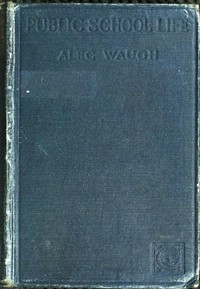
Public School Life: Boys, Parents, Masters by Alec Waugh
If you pick up Public School Life expecting a simple story with a clear beginning, middle, and end, you might be surprised. Alec Waugh, who was just a teenager when he wrote this, doesn't give us a traditional plot. Instead, he paints a detailed picture of a year in the life of a fictional English public school, which is really a boarding school for boys. We follow a group of students through the rhythms of term time: classes, sports, punishments, and the complex social world of the dormitories and common rooms.
The Story
The book is structured around the school year and the experiences of different boys. We see everything from the nervous new student trying to find his place, to the senior prefects who wield significant power. A big part of the narrative focuses on the relationships—sometimes friendly, often adversarial—between the boys and their masters. Waugh shows how the school operates like a miniature society with its own strict rules, both written and unwritten. There are conflicts over loyalty, academic cheating, the fierce importance of sports, and the constant judgment from peers. It's a vivid, episodic look at a world that is both privileged and punishing.
Why You Should Read It
I found this book utterly gripping because it feels so honest. Waugh isn't writing a nostalgia piece; he's conducting an autopsy on the system that shaped him. His observations are witty and cutting. He shows how the school's goal of building 'character' often meant encouraging conformity and turning a blind eye to bullying. The characters, from the weak boy targeted by others to the master who secretly despises his job, feel real and flawed. What struck me most was how timeless some of these dynamics are. The anxiety of fitting in, the arbitrary nature of authority, and the struggle to maintain your individuality in a group—these are things anyone can recognize, even if you never set foot in a boarding school.
Final Verdict
This book is perfect for anyone who loves character-driven social observation. If you enjoyed novels like A Separate Peace or shows that dissect closed communities, you'll find a lot here. It's also a must-read for fans of British literature and social history, as it provides the real-life backdrop for so many stories set in this world. Just be warned: it's not a cozy, romantic look at the past. Waugh pulls no punches, and that's exactly what makes it such a powerful and memorable read.
This title is part of the public domain archive. You are welcome to share this with anyone.
Emily Moore
9 months agoI've been looking for a reliable source on this topic, and the step-by-step breakdown of the methodology is extremely helpful for students. The price-to-value ratio here is simply unbeatable.
Elizabeth Jackson
1 year agoImpressive quality for a digital edition.
Paul Miller
1 year agoHaving read the author's previous works, the formatting on mobile devices is surprisingly crisp and clear. I appreciate the effort that went into this curation.
Ashley Johnson
3 months agoI appreciate how this edition approaches the core problem, the data points used to support the main thesis are quite robust. The price-to-value ratio here is simply unbeatable.

John Thomas
8 months agoA brilliant read that I finished in one sitting.